EPR Registration Framework in India: Sustainability Compliance in a Changing Global Economy
- ASC Group
- Mar 17
- 3 min read

As the world moves toward sustainable business practices, Extended Producer Responsibility (EPR) is becoming a key regulatory focus. Governments and global organizations are increasingly holding manufacturers, importers, and brand owners accountable for the environmental impact of their products, especially plastic and electronic goods.
In India, EPR Registration ensures that companies comply with waste management and sustainability norms. Whether you are manufacturing, importing, or selling products, obtaining EPR certification is essential for legal compliance, environmental accountability, and uninterrupted market access.
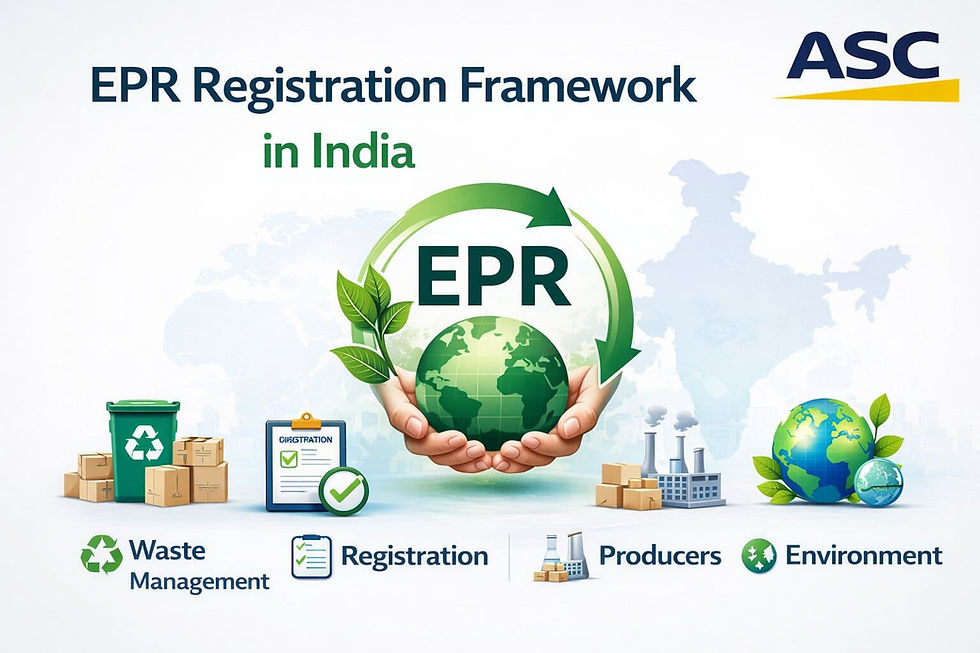
What is EPR Registration in India?
Extended Producer Responsibility (EPR) is a policy approach where producers are responsible for the collection, recycling, and environmentally safe disposal of products after consumer use.
Purpose of EPR
Ensures proper waste management.
Promotes sustainable packaging practices.
Reduces environmental impact of products across their lifecycle.
The Central Pollution Control Board (CPCB) governs EPR compliance in India, providing regulations and guidelines for registration, reporting, and monitoring.
Who Needs EPR Registration?
EPR registration applies to:
Producers, importers, and brand owners of plastic or electronic products.
Companies selling packaged goods under their brand.
Failure to comply can lead to fines, blocked imports, or regulatory action, making EPR compliance crucial for business continuity.
Importance of EPR Compliance in a Changing Global Economy
EPR compliance is not just a regulatory requirement—it is also a strategic business consideration:
Global sustainability trends: Consumers and governments favor environmentally responsible companies.
Supply chain and market access: Non-compliance may affect imports, exports, and distribution channels.
Corporate social responsibility: Demonstrating EPR compliance strengthens brand image and sustainability credentials.
Challenges in EPR Registration and Compliance
Companies often face difficulties in managing EPR requirements:
Complex state-level regulations: Different rules across Indian states require careful tracking.
Data accuracy: Environmental impact reports and recycling data must be precise.
Tracking obligations: Companies must monitor collection, recycling, and disposal of products.
Lack of expertise: Delays or errors may occur without professional guidance.
Step-by-Step EPR Registration Process
Identify products and applicable EPR rules – Determine which of your products require registration.
Create CPCB account and submit online application – Use the official CPCB EPR Registration online portal.
Upload required documentation – Product information, sales data, and recycling or disposal plans.
Receive EPR Registration certificate – Once approved, the certificate allows legal compliance.
Ongoing compliance reporting and renewal – Submit periodic reports and renew the certificate to maintain compliance.
Role of EPR Registration Consultants
Engaging expert EPR Registration Consultants can simplify the process:
Guide businesses on documentation and application submission.
Ensure compliance across multiple product categories.
Assist with CPCB registration, reporting, and timely renewals.
Reduce the risk of fines, delays, or regulatory non-compliance.
Benefits of EPR Certification for Businesses
Obtaining EPR certification brings several advantages:
Legal compliance: Avoid penalties and regulatory issues.
Uninterrupted market access: Ensures imports, sales, and distribution continue smoothly.
Enhanced corporate image: Demonstrates commitment to sustainability and environmental responsibility.
Regulatory risk mitigation: Prepares businesses for audits and inspections.
Global trade facilitation: Easier navigation of cross-border sustainability regulations.
FAQs – EPR Registration in India
Who is required to get EPR Registration?
All producers, importers, and brand owners of plastic and electronic products, as well as companies selling packaged goods, must comply.
How long does the registration process take?
Depending on product categories and documentation readiness, the process can take a few weeks to a couple of months.
Can EPR Registration be done online?
Yes. CPCB provides a portal for CPCB EPR Registration online, allowing digital submission and tracking.
What happens if compliance is not maintained?
Non-compliance can result in fines, blocked shipments, and reputational risks. Regular reporting and consultant guidance mitigate these risks.
Conclusion
In a global economy increasingly focused on sustainability, EPR Registration in India is essential for businesses involved in manufacturing, importing, or selling plastic and electronic products. Beyond legal compliance, EPR certification strengthens brand reputation, ensures market access, and demonstrates environmental accountability.
Early planning, proactive monitoring, and expert support from EPR Registration Consultants can streamline registration, ensure ongoing compliance, and help businesses meet India’s sustainability requirements confidently.
Comments