Why Incomplete BIS Import Preparation Is Creating Operational Disruptions Across Multiple Product Segments
- ASC Group
- Jun 19
- 4 min read

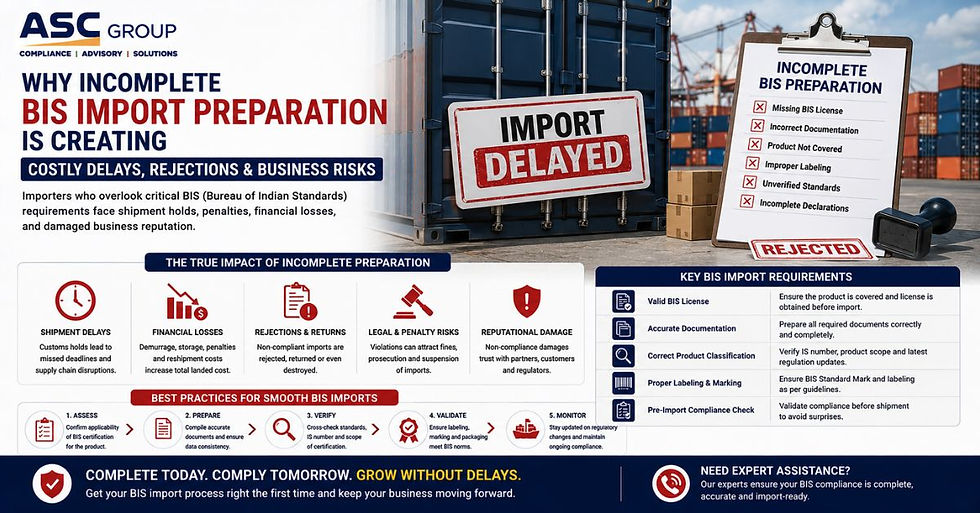
In today's highly regulated import environment, obtaining the right BIS Certification for Steel and securing a valid BIS Certificate for Import have become critical requirements for businesses importing products into India. However, many importers still underestimate the importance of proper compliance preparation. As a result, incomplete documentation, regulatory gaps, and delayed approvals are creating significant operational disruptions across multiple product categories, especially in steel and regulated industrial products.
The question many importers ask is:
"Why are shipments getting delayed even when products are ready for import?"
The answer often lies in inadequate BIS compliance planning.
The Growing Challenge of Incomplete BIS Import Preparation
India's regulatory framework requires several imported products to comply with quality and safety standards before entering the market. When businesses fail to complete the necessary BIS procedures in advance, they face unexpected hurdles that affect supply chains, revenue, and customer commitments.
Common issues include:
Delayed customs clearance
Shipment detention at ports
Additional warehousing costs
Product testing delays
Rejection of import consignments
Business continuity disruptions
Increased compliance penalties
These challenges are becoming increasingly common among importers dealing with steel products, electrical goods, machinery components, chemicals, and other regulated items.
How Incomplete BIS Compliance Impacts Steel Imports
Among all regulated sectors, steel imports face particularly strict scrutiny. Obtaining BIS Certification for Steel Imports is not simply a regulatory formality—it is a mandatory requirement for many steel products entering India.
Without proper certification:
Import consignments may be held at customs.
Product distribution schedules can be disrupted.
Contracts with buyers may be affected.
Additional inspection and testing costs may arise.
Importers may face regulatory notices.
Many businesses begin the import process without fully understanding the certification timeline, resulting in avoidable operational delays.
Why Importers Struggle with BIS Requirements
Several factors contribute to compliance failures:
1. Lack of Regulatory Awareness
Many importers are unaware that specific products require a BIS Certificate for Import of Steel and other regulated goods before shipment arrival.
2. Incomplete Documentation
Missing technical documents, test reports, manufacturing details, or authorization letters can delay approvals.
3. Incorrect Product Classification
Wrong product categorization often results in compliance mismatches and application rejections.
4. Delayed Application Submission
Waiting until goods are already in transit leaves little room to address regulatory concerns.
5. Changes in Compliance Requirements
Regulatory updates frequently affect import obligations, making expert guidance essential.
What Is the Cost of Delayed BIS Certification?
Businesses often focus on certification fees but overlook the hidden costs of non-compliance.
Potential financial impacts include:
Demurrage charges at ports
Warehouse storage expenses
Supply chain interruptions
Missed sales opportunities
Contractual penalties
Customer dissatisfaction
Increased administrative costs
Industry observations indicate that import delays can significantly increase overall logistics expenses, especially for time-sensitive industrial and infrastructure projects.
The Solution: Proactive BIS Compliance Planning
Instead of treating certification as a last-minute activity, importers should integrate compliance planning into their procurement and logistics strategy.
A structured approach includes:
Before Importing
Identify applicable BIS requirements.
Verify product standards.
Prepare technical documentation.
Assess testing requirements.
Complete certification applications.
During Import Planning
Monitor certification progress.
Coordinate with manufacturers.
Review customs documentation.
Ensure regulatory alignment.
Before Shipment Arrival
Confirm certification validity.
Verify labeling requirements.
Prepare import clearance documentation.
Address compliance gaps proactively.
This approach helps reduce delays and improves supply chain predictability.
How ASC Group Helps Importers Avoid Operational Disruptions
Navigating India's import compliance framework can be complex, particularly for businesses handling regulated products and steel imports. This is where ASC Group provides end-to-end compliance support.
ASC Group assists importers through:
BIS application preparation
Product eligibility assessment
Documentation review
Regulatory compliance consulting
Certification process management
Coordination with relevant authorities
Import compliance guidance
By addressing compliance requirements at the planning stage, ASC Group helps businesses minimize delays and maintain smooth import operations.
Why BIS Compliance Is Becoming More Important for Indian Importers
The increasing focus on product quality, safety, and consumer protection has strengthened enforcement measures across various sectors.
As a result, BIS Certification for Indian Importers is no longer viewed as an optional compliance activity. It has become a strategic business requirement that directly impacts market access and operational efficiency.
Importers who proactively meet compliance requirements benefit from:
Faster customs processing
Reduced regulatory risks
Improved supply chain reliability
Better business reputation
Greater customer confidence
Understanding Mandatory BIS Requirements
Many businesses still ask:
Is BIS Certification Mandatory for Imported Products?
For several regulated categories, the answer is yes.
Mandatory BIS for Import applies to numerous products covered under Quality Control Orders (QCOs) and other regulatory frameworks. Failure to comply can result in shipment detention, penalties, or market restrictions.
Therefore, importers must verify applicable requirements before placing orders or initiating shipments.
Frequently Asked Question
How can importers avoid BIS-related shipment delays?
Solution:
Importers should begin compliance planning well before shipment dispatch. This includes identifying applicable standards, preparing documentation, completing certification procedures, and seeking expert guidance when necessary. Working with experienced compliance consultants such as ASC Group can significantly reduce risks and ensure smoother import operations.
Conclusion
Incomplete preparation for BIS Certification for Steel and obtaining a valid BIS Certificate for Import continues to create operational disruptions across multiple product segments. Delays, compliance failures, and increased costs often stem from insufficient planning rather than regulatory complexity itself.
Businesses involved in BIS Certification for Steel Imports, BIS Certificate for Import of Steel, BIS Certification for Indian Importers, and other areas governed by Mandatory BIS for Import requirements should prioritize compliance from the earliest stages of procurement.
With expert support from ASC Group, importers can streamline certification processes, reduce operational risks, and maintain uninterrupted access to the Indian market.
Comments