Why Organizations Are Facing Growing Pressure to Strengthen Data Protection Practices Under India’s DPDP Compliance Framework
- ASC Group
- Jun 16
- 4 min read

The Digital Personal Data Protection Act is reshaping how organizations in India collect, store, and process personal data. With rising digital transactions, cyber risks, and stricter enforcement expectations, companies are now under increasing pressure to adopt strong DPDP Compliance Solutions to avoid penalties and reputational damage.
At the same time, businesses are realizing that compliance is not just a legal requirement but a long-term trust-building strategy. This is why demand for DPDP Solutions, dpdp consultants, and structured data protection compliance frameworks is rapidly increasing across industries.
This blog explains the challenges organizations face, the compliance expectations under the Digital Personal Data Protection Act, and how professional guidance can simplify the journey toward full compliance.
Why the Digital Personal Data Protection Act Is Creating Urgency
The Digital Personal Data Protection Act introduces strict rules for how personal data must be handled, including consent, storage limitation, and breach reporting. Organizations that fail to comply may face significant financial penalties and regulatory scrutiny.
Key drivers of urgency include:
Rapid growth of digital-first businesses
Increasing cyberattacks and data breaches
Higher customer awareness about privacy rights
Mandatory compliance requirements under Indian law
Cross-border data handling complexities
As a result, organizations are prioritizing DPDP Compliance Solutions to align their operations with legal expectations.
Key Challenges in DPDP Compliance Implementation
Despite awareness, many organizations struggle to implement effective data protection compliance systems under the Digital Personal Data Protection Act.
1. Lack of Clear Data Mapping
Many companies do not have a complete inventory of what personal data they collect, where it is stored, and how it is processed.
2. Consent Management Issues
Properly capturing, storing, and managing user consent is one of the most complex aspects of DPDP compliance.
3. Legacy System Limitations
Older IT systems are often not designed to support modern privacy requirements.
4. Cross-Department Coordination Gaps
Compliance requires coordination between legal, IT, HR, and marketing teams, which is often missing.
5. Limited Internal Expertise
Many organizations lack trained dpdp consultants or internal privacy specialists.
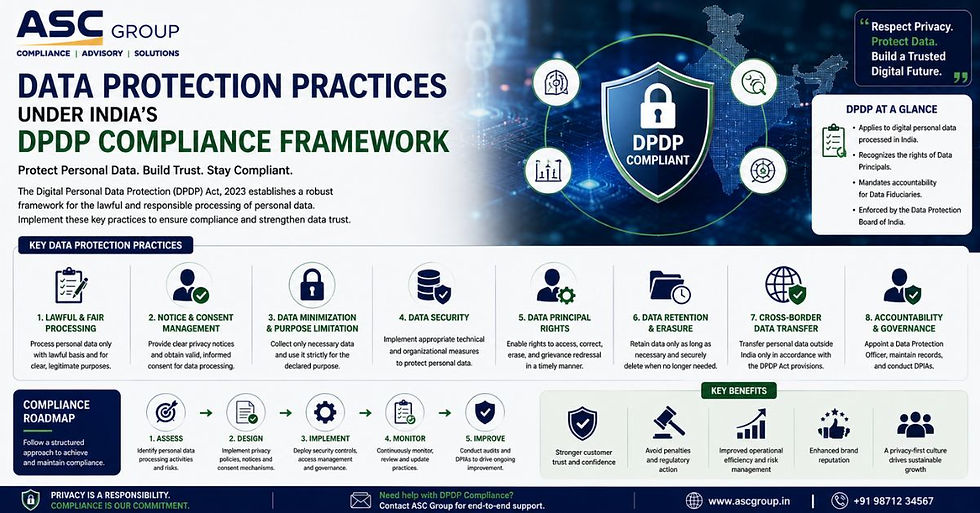
What the DPDP Compliance Framework Requires
To align with the Digital Personal Data Protection Act, organizations must implement structured governance and technical safeguards.
Key requirements include:
Clear and lawful purpose for data collection
User consent management systems
Data minimization practices
Strong security controls and encryption
Breach notification mechanisms
Defined data retention and deletion policies
Meeting these requirements requires well-planned DPDP Solutions tailored to each organization’s data ecosystem.
Strategic Approach to DPDP Compliance Solutions
A structured roadmap helps organizations reduce compliance risk and improve readiness under the Digital Personal Data Protection Act.
Step 1: Data Discovery and Mapping
Identify all personal data sources
Classify sensitive and non-sensitive data
Map data flow across systems
Step 2: Gap Analysis
Compare current systems with DPDP requirements
Identify compliance weaknesses
Prioritize high-risk areas
Step 3: Policy Development
Create privacy policies aligned with DPDP rules
Define consent and withdrawal mechanisms
Establish internal governance frameworks
Step 4: Technical Implementation
Deploy encryption and access controls
Implement consent management tools
Upgrade legacy systems where needed
Step 5: Monitoring and Reporting
Continuous compliance audits
Real-time breach detection systems
Regular reporting structures
This structured approach ensures scalable data protection compliance across business operations.
Why Organizations Need DPDP Consultants
The complexity of the Digital Personal Data Protection Act makes professional expertise essential. Skilled dpdp consultants help organizations avoid costly mistakes and accelerate compliance readiness.
Key benefits of consultants include:
End-to-end compliance assessment
Custom DPDP Solutions design
Legal interpretation of DPDP provisions
Risk mitigation strategies
Training internal teams on compliance
Without expert support, organizations often face delays and inconsistent implementation of DPDP Compliance Solutions.
Business Risks of Non-Compliance
Failing to comply with the Digital Personal Data Protection Act can lead to serious consequences:
Financial penalties and legal action
Loss of customer trust
Operational disruptions
Data breach liabilities
Reputational damage in the market
These risks highlight why investing in data protection compliance is no longer optional but essential.
How ASC Group Helps in DPDP Compliance Solutions
ASC Group provides structured advisory and implementation support for organizations navigating the Digital Personal Data Protection Act requirements.
Their DPDP support includes:
End-to-end compliance assessment
Custom-built DPDP Solutions for enterprises
Legal and technical gap analysis
Implementation of privacy frameworks
Support from experienced dpdp consultants
Why ASC Group is preferred:
Strong expertise in regulatory compliance frameworks
Practical implementation approach
Industry-specific DPDP Compliance Solutions
Focus on long-term compliance sustainability
With ASC Group’s support, organizations can streamline data protection compliance and reduce regulatory risks significantly.
Common Questions & Answers
Q1: What is the Digital Personal Data Protection Act?
It is India’s data privacy law that regulates how organizations collect, store, and process personal data.
Q2: Why is DPDP compliance important?
It ensures legal protection, builds customer trust, and prevents penalties.
Q3: What are DPDP Solutions?
They are structured frameworks and systems designed to help organizations comply with DPDP requirements.
Q4: Do organizations need DPDP consultants?
Yes, because compliance involves legal, technical, and operational complexity that requires expert guidance.
Conclusion
The Digital Personal Data Protection Act has significantly increased the compliance burden on organizations handling personal data. With rising regulatory scrutiny and evolving digital risks, businesses must adopt robust DPDP Compliance Solutions to remain secure and legally compliant.
However, achieving full data protection compliance requires structured planning, technical implementation, and expert guidance from dpdp consultants.
With the support of experienced advisors like ASC Group, organizations can implement scalable DPDP Solutions that ensure long-term compliance, reduce risk, and build stronger trust with customers in the digital economy.
Comments